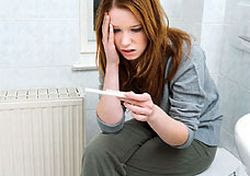
Methodist Hospital PsychoTherapist Mary Jo Rapini says kids tend to have less structure and supervision in the summertime and more time on their hands. She also says girls who feel alone this summer, isolated or who don't feel close to their parents are more likely to get pregnant.
Rapini says a simple way to keep your child from becoming a parent before they are ready is to get and stay involved in their lives. She says parents who share their lives with their children and who show interest in their kids lives are less likely to have a teen who becomes a parent.
Rapini encourages parents to have open dialogue about sex and the consequences that come with it.
Texas has the fifth highest teen pregnancy rate in the country. Rapini has many more tips on her website www.maryjorapini.com . Including 70 things you can do instead of having sex in a committed relationship.
Rapini is the co-author of "Start Talking: A Girl's Guide For You & Your Mom About Sex, Health or Whatever."
Rapini encourages parents to use things like books, articles or TV reports to launch conversations with their kids on a daily basis.
Source

ALTHOUGH I still have to be on bed rest, I am looking forward to hitting my second trimester. Hopefully the dizziness, grouchiness, and sluggishness I’m feeling will slowly disappear.
At the moment, I can’t even seem to want to brush my hair. The only thing that seems inviting is to soak in the tub to ward off the unbearable heat, which seems to be radiating from my body. Now I know why they say every pregnancy is different.
A few weeks back, I was with my son in Powerplant and bumped into Daphne Oseña-Paez. It was only after five minutes of chatting that I noticed she was pregnant. But she looked so good!
It also surprised me to find out she was on her third trimester. I asked her to share five pampering tips for pregnant women since I know we sometimes need help in taking care of ourselves at this delicate time.
Here’s what Daphne shared:
Get a pedicure. An occasional pedicure won’t hurt. But stay away from foot spas, since they can trigger contractions. It’s best to bring your own pedicure gadgets so you are sure the items are clean. Since you will most likely wear flats and open-toed shoes for a few months, having pretty toes can really be a boost.
Have your hair shampooed and blow-dried at a salon. Pregnant women should stay away from chemical treatments and hair-dyes. In order to feel glamorous or, at least, neat, I have been treating myself to regular washes and blowouts at the salon, in the process discovering some inexpensive neighborhood places. Sometimes I bring my own shampoo, conditioner and brushes to ensure quality and hygiene.
The service? Not bad for P150.
When I’m due for a major function or appearance, I head to Emphasis Salon.
Go for regular facial cleaning with a dermatologist. Just because you’re pregnant doesn’t mean you should forget about skin care. There are creams and ointments that are forbidden for pregnant women, such as retinoic acid and other whitening products. Given the hormonal imbalance that can cause breakouts and darkening, a visit to a dermatologist can help.
I haven’t stopped going for monthly cleaning with my dermatologist, Doctor Gilbert Yang. No lasers and fancy creams for me; he just cleans my pores and clears away whiteheads. When my skin gets too dry, I apply Olay Total Effects.
Slather on tummy cream. I don’t believe any cream or oil can totally eradicate the stretch marks. But some products can give relief from dryness and itchiness (scratching eventually might cause scars).
During my first two pregnancies, I splurged on Clarins Tonic Oil. I didn’t get any stretch marks. For this pregnancy, I’ve discovered a more budget-friendly solution to my dry and itchy growing tummy: Palmer’s Organics Tummy Butter for Stretch Marks. It’s one-fifth cheaper than Clarins Tonic Oil. It has Vitamin E, collagen, elastin and soothing lavender, and it’s paraben-free and mineral oil-free. I get the same relief at a much lower price. And I love the smell.
Wear makeup and get dressed up. I was in a rut during my first trimester. All I wanted to do was lie in bed like a sloth. But because I had to continue working (as host of “Urban Zone”), I had to get dolled up at least once a week. I had to wear nice outfits and full makeup.
For those who don’t work in front of the camera, I highly suggest you make an effort to look good. Even minimal makeup can boost your mood and self-image. Put on some lip gloss and blush. Or if you want to go the extra mile, play with eye makeup.
Now is also the time to enjoy fashion. There are a lot of non-maternity clothes available off-the-rack, and these can take you up to your 40th week.
Source

Rumor has it, Nicole Richie has decided on a name for the baby boy she is carrying. According to sources close to the expectant celebrity socialite and her partner Joel

"When she heard Donald
Nicole
Earlier this month, there were reports saying the celebrity couple is expecting a son after their friends allegedly claimed to have seen them buying blue-colored baby gear. When asked to verify the story during "Larry King Live" on Thursday, May 28, Nicole said, "We want the surprise ..... I'll get the clothes after."
Source


There is something fascinating about twins and many women long for a twin pregnancy. In recent years, the number of women having a twin pregnancy or even higher types of multiple pregnancies such as sextuplets has increased. This is due to a large number of reasons. Many women simply want to have a twin pregnancy so that they do not need to have another pregnancy to produce a sibling for an only child. The trauma of birth is often something that many women feel that they only want to go through once and having twins would be the perfect answer.
Twins do hold a particular fascination for a lot of people and a lot of research has been done into how a woman can increase the chances of her having a twin pregnancy. Some of the results are fairly unusual. For instance, the mother's diet may influence whether she has a higher chance of a twin pregnancy. There are more twins in certain cultures and one of these is a tribe where they eat a lot of yams. So, there is a theory that it is a certain chemical in the yams that helps the women in this culture have a twin pregnancy. Obviously, the mother needs to eat re than just yams to have a healthy pregnancy but it is an interesting theory that she may want to consider if she wants a twin pregnancy.
If a woman is breastfeeding when she conceives then she is more likely to have a twin pregnancy than women who were not breastfeeding. The breastfeeding causes a reduction in the amount of calcium in the woman's system and this has an effect on the egg during conception and ovulation can increase the chances of her having a twin pregnancy.
Older women are more likely to have a twin pregnancy. There is an increased ovulation of multiple eggs in older women and this can lead to a higher chance of the woman having a twin pregnancy. Fertility treatments can also lead to an increased chance of multiple pregnancies. It is also evident that women from African backgrounds are more likely to have pregnancies that are twins or more.
There used to be a theory that twins actually skipped a generation but now it is widely believed that a twin is more likely to have a twin pregnancy themselves. Obviously, this is genetic, but it is another point to consider if you are a twin and want to become pregnant. Similarly, if your family history or that of your partner's has a lot of twins then there is an increased chance that you will have a twin pregnancy too.

There are various types of pregnancy due date calculator that health professionals can use to determine the due date of a baby. In the very early stages of a pregnancy the most frequently used types of pregnancy due date calculator involve using the date that a woman had her last menstrual cycle and the usual length of her period. This type of pregnancy due date calculator is only a rough estimator of when a baby is actually due. A number of factors make this type of pregnancy due date calculator being less than accurate. The most important factor is using this form of pregnancy due date calculator is that a woman needs to know the date of her last period. If she has missed more than one menstrual cycle before she thinks that she may be pregnant then her accurate recollection of the date of her last menstrual cycle is not very reliable. A woman may not have a period or may suffer from irregular menstrual cycles and this makes the date of her last period even less accurate for the pregnancy due date calculator.
The pregnancy due date calculator not only works with the inaccurate information provided about the date of a woman's last menstrual cycle but also assumes that every woman has a menstrual cycle of 28 days. This means that in the early stages of pregnancy a pregnancy due date calculator can only used to produce an estimated due date for the baby. Of course, your health professional will use this type of pregnancy due date calculator in the initial stages of your pregnancy to give a general timeline for the pregnancy but it is important to remember that the estimated due date given can be extremely inaccurate.
After approximately ten weeks a woman is usually given a scan to help more accurately assess the length of the pregnancy. The size of the growing foetus can be used from these ultrasound scans to provide various measurements which are used in a pregnancy due date calculator to determine the estimated due date more accurately. For example, the length of the foetus and the size of its head at various stages throughout the pregnancy are measured and these provide more accurate figures for a pregnancy due date calculator to be able to predict the date of birth. This is because a foetus grows at a predicted rate and it is by using these measurements that a pregnancy due date calculator can give the woman the best estimate as to when her baby is due.
Blood tests that measure that amount of hCG in a woman's blood can also be used by a pregnancy due date calculator. Blood and ultrasound results are the best sources of data for a pregnancy due date calculator and are likely to provide a much more accurate due date compared to any type of pregnancy due date calculator based solely on a woman's previous menstrual period.


